




How to Jump Start your Chevrolet’s battery
Have you ever got behind the wheel, put your key in the ignition and turn it, only to hear a clicking noise? Maybe you listened to your engine labor trying to start before you get that clicking noise, or perhaps you simply heard nothing at all. These noises, or lack thereof, point to a dead battery, and if you’ve never experienced a dead battery, you’re one of the lucky few.
If it hasn’t happened yet, the odds are good it will, so you should be prepared. Fortunately, you can jumpstart the battery in your Chevrolet with minimal effort and a single tool. Here’s how. View our inventory of New Chevrolets or If you have any questions give us a call at 931-548-1370 today!
Step One: Find a Vehicle That Runs
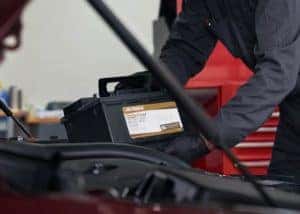
This first step can be the most challenging. Hopefully, your battery died in your driveway. If you have a second car in the household, you’re in business. If not, you can ask a neighbor if they can help you jumpstart your vehicle.
Step Two: Locate Your Jumper Cables
You need jumper cables to jumpstart your car. Jumper cables come in varying lengths, but they all have two large alligator clips on each end. The alligator clips have a red and black handle on both ends.
Step Three: Locate Your Battery
Pop the hood and look toward the front of your engine compartment on either side. You’ll see the battery easily. If you’ve never seen a battery before, look for the large square with a black and a red wire coming off it. The red wire comes off the positive battery terminal, and the black wire comes off the negative terminal. If you don’t have colored wires for some reason, your battery should have a “+” symbol next to the positive terminal and a “-” symbol beside the negative terminal.
Step Four: Attach the Jumper Cables
The red alligator clip on your jumper cables attaches to the positive terminal on your battery. The black clip on the same end attaches to the negative terminal. You should always hook up the jumper cables to the dead battery first. Connecting them to a battery with power first can result in a mild shock or worse if you happen to touch the unattached ends together. At the very least, sparks will fly.
Only after you’ve attached your jumper cables to the dead battery can you attach the other end to the car’s battery that runs.
Step Five: Start the Jumper Car
Start the second vehicle and let the engine idle for several minutes. By idling for a few minutes, you transfer some of the good battery’s power to the dead battery. It may not always be necessary to wait, but it certainly helps.
Step Six: Start the Dead Car
After waiting a few minutes, you should be good to go. Try starting the dead car. The engine should turn over right away and start running. If the engine doesn’t turn over at all, check the jumper cable connections, wait a few minutes, and try again.
Step Seven: Unhook the Jumper Cables
If both cars are running at this point, no matter which end of the cables you disconnect, electrical current will be flowing through them. Do not touch the metal alligator clips together, or sparks will fly. Most mechanics recommend attaching the red clip to the rubber cable just below the black clip. Clipping like this prevents the two clips from touching. After this, you can safely remove the jumper cables from the second car. Once disconnected, unclip the red alligator from the rubber wire to prevent damage.
Finished!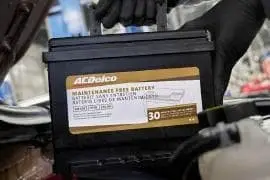
You’ve successfully jumpstarted your car. Congratulations! You can store your jumper cables, close your hood, and be on your way.
Why Do Batteries Fail?
If you had to jumpstart your car, your battery died for a reason. You need to figure out why or you’ll be jumpstarting your vehicle the next time you try and start it.
Human Error
Most of the time, you can blame human error. You or someone who drove the car last probably left the lights on or some other electrical component. If that caused your battery to fail, you’d be fine. The alternator in your Chevrolet will do its job and recharge your battery. If you can, leave your car running for at least thirty minutes to allow for enough recharge to start your car the next time you need it.
Corrosion
If you didn’t leave the lights or some other electrical component, you might have a bad battery. Batteries create sulfates as part of the natural conversion of the chemical energy within the battery to electrical energy sent to your engine’s starter and other electrical systems. Often, these sulfates form on the battery’s terminals and look like greenish-blue algae.
These algae can prevent the electrical energy from returning to the battery from the alternator in the recharging process. Without the returning charge, your battery uses up all its chemical energy to operate your car’s electrical systems and eventually runs out of power. Detach the wires from your battery terminals and scrub the algae away with a wire brush. Cleaning up the connection can restore the proper flow and stop your battery from dying.
Metal plates within the battery corrode over time because of the acid stored inside the battery. When enough corrosion occurs, your battery fails to operate. At this point, you have to replace your battery. There’s no real way to tell unless you have the battery tested. You can bring your car to Stan McNabb Chevrolet of Columbia, and our service center’s factory-trained technicians can test your battery and tell you if you need to replace it.
Bad Alternator
If your battery test shows it’s okay, you probably have a bad alternator. Alternators last anywhere from 3-10 years, depending on various factors. An alternator converts mechanical energy from the engine into electrical energy that supplies electricity to your car’s electrical systems and returns electrical energy to the battery to store for later use.
If you recently had to jumpstart your car, we recommend you have your battery tested immediately. When you bring your vehicle to our service department, we can test your alternator as well. Both tests take only a few minutes. In most cases, we can replace your battery within 15 minutes. Your alternator might take a little longer, depending on the Chevy model.
We also recommend you purchase a portable jumpstart kit from us that contains a battery and cables. The battery in the kit eliminates the need for a second car, which could save you a lot of hassle should your battery die, and you’re alone.
0 comment(s) so far on How to Jump Start your Chevrolet’s battery